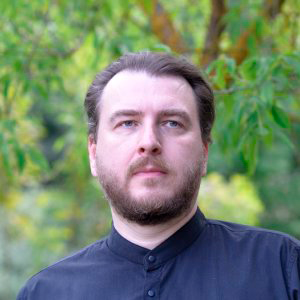
Semjon Uglev

Psychotherapist for those living abroad · Psychoanalyst · Supervisor

Saint Petersburg (Pushkin) · Online sessions worldwide, sessions in Russian · semjon@uglev.com · uglev.com

Semjon Uglev — psychotherapist

Psychotherapy for Change

My name is Semjon Uglev. I am a psychotherapist and psychoanalyst, an accredited supervisor. I myself lived abroad for many years, and I know firsthand how a person changes when familiar anchors disappear: language, work, loved ones, one’s usual sense of self.

When familiar advice, self-help techniques, and courses no longer help, and anxiety, emptiness, or burnout refuse to lift, it may be time to explore the very space of your experience.

Our work is built around your way of being in the world — your relationships, your inner sense of time. Together we define what needs to change for you: coping better with intense feelings, rediscovering interest in life, returning to your work and to fulfilling relationships. Easing suffering remains one of the central aims of a psychotherapeutic encounter.

Book an initial consultation — €50

The first meeting lasts 60 minutes. There is no obligation to continue: first, we simply get to know each other and see whether this format suits you.

Moving abroad is not just “a new chapter.” It is a rupture in the entire fabric of life: language, status, relationships, one’s sense of self. Seeking support is not a weakness — it is a sensible step for someone who wants not merely to survive, but truly to live where they are.
I understand the context of emigration You do not have to explain why moving abroad can feel like a loss.
Psychotherapy for change Consistent, focused work — not a random collection of techniques.
Online from anywhere in the world We find a time that works with your time zone.
Confidential What is discussed in sessions remains within the bounds of therapeutic confidentiality.

Does this sound familiar?

Many people come to me with experiences that are hard to put into words. If even one of these resonates, you are in the right place.

All of this is a normal response to a life that has changed more dramatically than for most people around you. And it is something we can work with.

You can begin with a diagnosis — or simply with the words, “I don’t understand what is happening to me.” There is no need to find the “right” name for your difficulty in advance.

If you have received a diagnosis, it is important to discuss the specialist’s assessment, treatment, and any current risks. At the first meeting, we clarify whether this format is right for you; where necessary, help may need to involve other professionals or a more specialised programme.

There is also room in our conversations for loss, loneliness, and questions of faith, guilt, and hope — if these matter to you.

Write about your situation

Approach

My work draws on contemporary approaches to world psychotherapy: Dasein analysis, ontological psychoanalysis, and existential psychotherapy. This is not a collection of techniques, but a way of listening carefully to what happens to a person when familiar life collapses and one has to rebuild oneself in new circumstances.

This approach makes it possible not only to talk about symptoms, but to notice recurring patterns, inner conflicts, relationships with oneself and others, and those experiences that are difficult to put into words.

Regain the sense: this is my life

We explore where you are living “as expected” and where — in your own way; what constrains you in the new world, and where you have stopped feeling like a participant in your own life.

Understand who you have become after moving

Relocation changes not only circumstances, but identity. We are not looking for a “correct” answer, but for your own way of being yourself between the old life and the new.

Find footing when the old supports are gone

Country, work, language, social circle, one’s familiar image of oneself — all of this can disappear at once. Therapy helps not merely to survive, but to find anew what one can lean on.

What this means in practice

This does not mean that every session turns into a conversation about philosophy. Rather, it helps us notice a deeper layer of what is happening: not only “what happened to me,” but how I now live, choose, resist, hope, and look for my place.

Principles of my work

What I work with

The concerns of people living far from home are often particular. Yet behind them lie ordinary human themes — simply within an unfamiliar, and often painful, context.

Adaptation and “not feeling at home”

Culture shock, the chronic strain of a new environment, a sense of living in waiting mode: life as if on pause — until the “real” return, or until better times.

Anxiety, emptiness, depressive states

Background anxiety, a sense of meaninglessness, apathy, dissatisfaction with oneself, low self-esteem, psychosomatic experiences.

Long-distance relationships and couple crises

A couple split by relocation; dependence on a partner; the difficulty of closeness when two people live in different countries, speak different languages, and adapt at different speeds.

Guilt toward those left behind

A sense of duty toward parents and friends “back there,” separation from family, painful conversations, the feeling that you have betrayed someone or simply run away.

Profession and recognition

A diploma that is not recognised, a career that has been reset, starting from zero. The loss of professional identity and status.

Identity: “Who am I now?”

Reassembling yourself between old and new cultures, languages, and communities. Searching for your own answer to who you have become — and who you want to be.

Loss and invisible grief

The death of loved ones at a distance, broken ties, the loss of a language and a familiar world. Grief that others often deny the right to be called grief.

Meaning and a full life

Creative and professional fulfilment, the return of a sense of fullness — not “back home,” but here, in the life you have now.

Crises and life transitions

Divorce, loss, a career change, forced relocation, or another turning point when old supports no longer hold, and new ones have not yet been found.

Wherever you are — the format is the same

Most of my practice takes place online. I work with Russian-speaking people living in different countries and time zones, for whom it matters to speak about difficult things in their native language — without having to explain the context of emigration from scratch every time.

In-person sessions are available in Saint Petersburg, in the town of Pushkin. For clients in other cities and countries, online therapy is available: the format, duration, and fee remain the same.

In-person sessions

  • Saint Petersburg
  • Pushkin
  • Pavlovsk
  • Slavyanka

Online for Russian-speaking clients worldwide

  • London
  • New York
  • Toronto
  • Sydney
  • Berlin
  • Amsterdam
  • Dubai
  • Tel Aviv
  • and any other location

If your city is not on the list, that does not stand in the way of our work: online sessions are available from anywhere in the world.

About me

Why I understand those living abroad

Experience of life far from home

For a long time, I lived in another country — with all that entails: a foreign language, the need to build a life from scratch, separation from loved ones, and questions about where my true home is.

This does not make me someone who “knows your situation better than you do.” But it does mean I do not need to spend sessions explaining the basics, nor be surprised by what others may dismiss as exaggeration.

Professional background

Psychotherapist · psychoanalyst · supervisor

  • Psychotherapist and accredited supervisor. I work within contemporary approaches to world psychotherapy (Dasein analysis, ontological psychoanalysis, existential psychotherapy — USA, Germany, France) and in-depth intermodal supervision.
  • Personal psychoanalysis since 2013 — with a member of the International Psychoanalytical Association (IPA), an archpriest and Doctor of Philosophy.
  • Psychologist-psychoanalyst, Master of Psychology with distinction; dissertation: “To Be Human: The Psychoanalytic Situation in the Light of Fundamental Ontology.”
  • Specialist of the Russian Psychotherapeutic Association (RPA) and author of certified RPA programmes. Member of the ECPP since 2021, full member and accredited supervisor of the OPPL.
  • Invited speaker at the European University at Saint Petersburg and MIPP; lecturer at the Institute of Philosophy and Psychology “Man and the World” and the Edunote educational platform.
  • Expert in private practice, supervision, and teaching; participant in educational projects on psychotherapy and psychoanalysis. Author of academic works and articles indexed in VAK and RINTS.
  • I have theological education and practical experience of church ministry. In my theoretical work, I explore the relationship between psychoanalysis, philosophy, and Christian thought.
An important clarification: the terms “psychotherapist” and “accredited supervisor” refer to Russian professional qualifications and memberships. They are not equivalent to the legally protected title of “psychotherapist” in Germany, Austria, or Switzerland.

How it works

Format

Online — from anywhere in the world, across all time zones. In person — Saint Petersburg, Pushkin, 14 Pushkinskaya St.

Duration and frequency

The first consultation lasts 60 minutes; subsequent sessions last 45 minutes. Frequency is tailored individually: usually between 1 and 3 sessions per week, though at the start it may be lower — we will discuss this at the first consultation.

Fees

Initial consultation — €50 for 60 minutes.
Subsequent sessions — €70 for 45 minutes.
An individual payment schedule is possible; the fee is fixed for the duration of the work.

What happens in the first meeting

  1. We clarify the situation: what is troubling you, for how long, how much it interferes with your life, and what help you have already sought. We discuss your expectations and whether my way of working suits you.
  2. We agree on goals and conditions: we identify the priority difficulties, the format and frequency of sessions. We outline the signs by which you will be able to notice improvement.
  3. We restore room for choice: we relate what happens in sessions to your life outside them. Gradually, it becomes possible to act not out of habitual patterns, but from greater clarity.

Not every session ends with relief or a clear answer. Yet the length of therapy, in itself, is not a sign of its usefulness.

What matters is not only new explanations, but changes in your state, relationships, work, and everyday possibilities. Timelines and outcomes are individual; I do not promise a predetermined number of sessions for symptoms to disappear.

This is not a diagnosis, nor a commitment to long-term therapy. If I see that you need a different specialist or a different form of help, I will say so directly and, where possible, point you in the right direction.

Confidentiality

For people abroad, the fear that “what if those back home find out” is often the main barrier to seeing a psychotherapist. So let me be direct: everything that happens in our sessions stays between us — within the bounds of therapeutic confidentiality.

I work according to international professional ethics standards and do not share information about clients with third parties — not with relatives, not with organisations, not with the “old life” you left behind.

Faith and meaning

For many people far from home, faith becomes one of the few remaining anchors. For others, it is precisely relocation that prompts a new look at faith, church, guilt, meaning, and one’s own path.

I approach these themes with care. In therapeutic work, I do not try to convince anyone what to believe, nor do I turn a conversation about pain into a sermon. But if faith, doubt, prayer, guilt, or the search for meaning is part of your life, we can speak about it openly — without having to explain everything from the beginning.

Theological education

How this works in therapy

Frequently asked questions

Why do you use one approach rather than many different methods?

Because for profound life change, what matters is not a mosaic of techniques, but a coherent framework. My work is grounded in contemporary approaches to world psychotherapy: Dasein analysis, ontological psychoanalysis, and existential psychotherapy — these are its inner pillars, not separate “menus” from which I pick at random.

I live in another country and time zone — is that possible?

Yes. Most of my practice takes place online with people living in different countries and time zones. We will find a time that works for both of us — including early-morning and late-evening slots.

What language are the sessions in?

The main language of sessions is Russian: this is a conversation about deeply personal matters, and I want you to be able to express them without limitation. If another language would be more comfortable for you, mention it in your first message — we will discuss what is possible.

How do I pay from abroad?

Payment is in euros: the initial consultation is €50 for 60 minutes, and subsequent sessions are €70 for 45 minutes. I will send payment details when you book and will suggest an option available in your country.

What if we are not a good fit?

The match between client and therapist is part of the therapeutic factor, and it is never guaranteed. If, after the first sessions, you feel that I am not the right person for you, say so directly. I will help you formulate your request and, where necessary, suggest another specialist.

How confidential is this?

Within the bounds of therapeutic confidentiality: I do not share the content of sessions with anyone. The only exceptions are cases of direct threat to life, as provided for by professional ethics.

What should I do if I am in crisis right now?

This website and online consultations do not replace emergency care. If there is a threat to your life or safety, contact your local emergency services or someone close to you who can stay with you.

Qualifications and memberships

Education

Professional memberships

Selected publications

Technique in the Therapeutic Encounter

Insights, 2026

DOI: 10.67978/INSIGHTS.2026.3.7

Ontological Foundations of Psychoanalysis: Intersubjective Constitution of Meaning and the Transcendent Source of Being

Journal of Clinical and Applied Psychoanalysis, 2026

psychoanalysis-journal.hse.ru/ru/article/view/43087

The Ontological Status of Affect and Its Epistemological Functions in Psychoanalytic, Philosophical, and Mystical Traditions

International Research Journal, 2026

DOI: 10.60797/IRJ.2026.163.16

What Is Ontoanalysis?

Ontoanalysis: Psychoanalysis and Supervision, 2025

DOI: 10.54775/PPL.2025.86.23.001

Full list of publications: ORCID 0009-0002-8695-6304 . Some works are indexed in VAK, RINTS, and eLIBRARY. RINTS: 1333017 · SPIN: 3482-3012.

Book a consultation

Write a few lines about yourself: who you are, where you are, and what brought you here. I will reply personally and suggest a time for an initial meeting.

Initial consultation — €50 for 60 minutes.
Subsequent sessions — €70 for 45 minutes.

Online — from anywhere in the world.
In person — Saint Petersburg, Pushkin.

If there is an immediate threat to life or a risk of harm to yourself or others, do not wait for a reply to your message or for a scheduled appointment: contact emergency services. Outside Russia, use your local emergency number.

Write and book

You can write in your own words: 3–5 sentences about what is happening and what you would like to explore are enough.

Email: semjon@uglev.com

Phone: +357 99999-709

WhatsApp: message on WhatsApp